Services

Our Services

Battery and engine restore

We can help you choose the right battery for your vehicle and lifestyle. Our staff can safely and professionally install your battery and get you back on the road.

Your car’s electrical system powers everything from the ignition and fuel systems to accessories such as your radio, headlights and wipers. The electrical system is, in turn, powered by the engine. Here are the three key components of the electrical system: Battery When your car’s engine is off, the battery provides the required power to the rest of the system, as well as during start-up (cranking). It also supplements the power from the charging system during periods of high demand. Charging System This is the heart of the electrical system. It consists of three main components: the belt-driven alternator, various electrical circuits, and a voltage regulator. The alternator supplies power to the electrical system and recharges the battery after your car has started. Just like it sounds, the voltage regulator controls the voltage, keeping it within the operating range of the electrical system. Starting System This system consumes more electrical power than any other in your car. The starting system consists of three components which work in tandem: the ignition switch, the starter relay or solenoid, and the starter motor. The ignition switch controls the starter solenoid, which activates the starter motor. The starter motor then turns the engine until your car starts.

Air Conditioning Service

Stay Cool This Summer! Turn on your AC—feeling warm air? Don’t sweat it! Our expert technicians ensure your system runs at peak performance.

Why Regular AC Maintenance Matters

Did you know that without routine maintenance, your air conditioning system loses about 5% of its efficiency every year? Over time, this decline means your AC may struggle to keep up, even if it’s not that old. The good news? Most of that lost efficiency can be recovered with proper servicing.

Schedule an appointment with our factory-trained professionals—we specialize in everything from modern computerized components to eco-friendly refrigerant disposal.


How Your AC System Works

Understanding the key components of your vehicle’s air conditioning system can help you identify issues early. Here’s a quick breakdown:

1. Compressor

Often called the “heart” of the AC system, the compressor is a belt-driven pump that compresses refrigerant gas and sends it to the condenser.

2. Condenser

Located at the front of your vehicle, the condenser cools and condenses refrigerant from a gas into a high-pressure liquid, helping to dissipate heat.

3. Receiver/Drier

This metal container filters moisture and debris from the refrigerant, preventing harmful acids from damaging your AC system. To maintain efficiency, it’s recommended to replace the drier every 3-4 years.

4. Orifice Tube/Expansion Valve

This component regulates refrigerant flow and converts high-pressure liquid into a low-pressure liquid before it enters the evaporator.

5. Evaporator

The evaporator removes heat and humidity from your vehicle’s cabin, ensuring a cool and comfortable ride. Since it holds the most refrigerant, it’s also the most vulnerable to corrosion—routine maintenance can prevent costly damage.


Schedule Your AC Service Today!

Don’t wait for the heat to take its toll! Whether you need routine maintenance or a full AC system repair, our experts are ready to help. Contact us today to book an appointment!

📞 Call Now: [Your Phone Number]📍 Visit Us: [Your Location]💻 Book Online: [Your Website Link]
Belts / Hose Inspection

Your vehicle relies on a complex system of belts and hoses to ensure smooth operation. While some accessories are powered electrically, others depend on the engine itself through a system of pulleys and belts.

Understanding these components can help you maintain your car’s performance and prevent unexpected breakdowns.

Accessory Drive Belts

Accessory drive belts transfer power from the engine to key components that keep your vehicle running efficiently. Many modern vehicles use a single serpentine belt instead of multiple individual belts to operate various accessories.

Common Accessories Driven by Belts:

  • Alternator – Generates electricity to power the battery and electrical systems.
  • Water Pump – Circulates coolant to prevent engine overheating.
  • Power Steering Pump – Provides assistance for smooth and effortless steering.
  • Air Conditioning Compressor – Enables the air conditioning system to function.
  • Radiator Cooling Fan – Helps regulate engine temperature by cooling the radiator.

Regular inspection and replacement of worn or damaged belts are crucial to avoid engine failure and costly repairs.

Hoses: Transporting Vital Fluids

Hoses in your vehicle are responsible for carrying essential fluids to different systems. These hoses are typically made of durable rubber with reinforced fabric layers to withstand pressure and temperature changes.

Types of Hoses in Your Vehicle:

  • Radiator & Heater Hoses – Carry coolant between the radiator, engine, and heater core to regulate temperature.
  • Fuel Hose – Transports gasoline from the fuel tank to the engine.
  • Power Steering Hose – Connects the power steering pump to the steering gear, ensuring smooth handling.

Over time, hoses can deteriorate due to heat, pressure, and wear. Regular inspections help prevent leaks, overheating, and potential breakdowns.

Keep Your Vehicle Running Smoothly

Routine maintenance of your vehicle’s belts and hoses is essential for reliability and performance. If you notice cracks, fraying, leaks, or unusual noises, it’s time for a professional inspection or replacement.

For expert advice and high-quality replacement parts, contact [Your Company Name] today!

Breaking Systems​

How Your Car’s Brake System Works Your car’s brake system is made up of two key components: Hydraulic System – Transfers force from the brake pedal to the wheels. Friction Materials – Creates the necessary friction to stop your car.

What Happens When You Hit the Brake Pedal?

When you press the brake pedal, a series of mechanical and hydraulic actions take place to bring your car to a stop. Let’s break it down:

Hydraulic System

Master Cylinder – Converts pedal pressure into hydraulic pressure, sending brake fluid to the wheels.
Brake Lines & Hoses – These high-pressure tubes carry brake fluid to the brakes at each wheel.
Wheel Cylinders & Calipers – These hydraulic components apply pressure to the friction materials, which stop your car.

Friction Materials: The Stopping Power

Disc Brake Pads & Drum Brake Shoes – Made of heat-resistant materials, these components create the friction necessary to slow down your vehicle.


Types of Brakes

Disc Brakes (Common in Most Cars)

Main Components:

  • Disc Brake Rotor – Attached to the wheel.
  • Caliper & Brake Pads – The caliper holds the brake pads.

How It Works:
When you press the brake pedal, the master cylinder sends hydraulic pressure to the caliper. The caliper then clamps the brake pads against the rotor, creating friction to slow down or stop the car.

Drum Brakes (Often Found in Rear Wheels)

Main Components:

  • Brake Drum – Attached to the wheel.
  • Wheel Cylinder, Brake Shoes & Springs – Work together to create friction.

How It Works:
Hydraulic pressure pushes the brake shoes against the inside of the drum, slowing down the wheel.


Additional Brake Features

Parking Brake (Handbrake or Emergency Brake)

  • Uses cables to mechanically engage the rear brakes.
  • Prevents the car from rolling when parked.

Anti-Lock Braking System (ABS) – A Safety Feature

  • Prevents wheel lock-up during sudden stops.
  • Uses wheel-speed sensors and computer-controlled hydraulics to pulse the brakes on and off rapidly.
  • Helps maintain traction and control in emergency braking situations.

Computerized Engine Analysis

Today’s vehicles are more advanced than ever, featuring sophisticated electronic engine control systems designed to improve fuel efficiency and reduce emissions.

Gone are the days of traditional tune-ups—modern engines require computerized diagnostics to ensure optimal performance.

At [Your Business Name], our factory-trained technicians use state-of-the-art diagnostic tools to analyze your vehicle’s control computer and pinpoint any issues. Whether it’s a sensor malfunction or an actual engine problem, we’ll provide you with a clear and accurate diagnosis—so you can get back on the road with confidence.

How Your Vehicle’s Computerized System Works

Your car’s engine is constantly monitored by a network of sensors and switches, which collect data on operating conditions and send electrical signals to the onboard computer. This intelligent system then adjusts the:

✔ Ignition system – Ensures precise timing for smooth engine operation.
✔ Fuel system – Regulates fuel delivery for maximum efficiency.
✔ Emission control system – Reduces harmful pollutants.

When the check engine light turns on, it’s your vehicle’s way of telling you something needs attention. Our expert technicians will perform a comprehensive diagnostic scan, checking the status of your engine control computer and sensors to determine the cause of the issue.

Key Sensors Monitored in Your Vehicle:

🔹 Mass Airflow Sensor (MAF) – Measures the air entering the engine.
🔹 Throttle Position Sensor (TPS) – Monitors the position of the gas pedal.
🔹 Manifold Absolute Pressure Sensor (MAP) – Tracks air pressure for fuel efficiency.
🔹 Coolant Temperature Sensor – Prevents overheating.
🔹 Exhaust Oxygen Sensor (O2 Sensor) – Ensures clean emissions.
🔹 Crankshaft & Camshaft Position Sensors – Regulate engine timing and performance.

Schedule Your Computerized Engine Analysis Today!

Don’t ignore that check engine light—let our team quickly diagnose and resolve any issues before they become costly repairs. Contact [Your Business Name] today to schedule your computerized engine analysis and keep your vehicle running smoothly.

📞 Call us at [Your Phone Number]
📍 Visit us at [Your Location]
💻 Book an appointment online [Your Website URL]

Cooling System Maintenance

Keep your vehicle’s heating and air conditioning system running efficiently with a comprehensive inspection from our ASE-certified technicians.

Using the Motorist Assurance Program Uniform Inspection Guidelines, we evaluate key components, compare their condition to manufacturer specifications, and provide expert recommendations.

Our Inspection Covers:

System Inspection
✔ Interior controls & blower operation
✔ Radiator coolant level, hoses, pressure cap & thermostat
✔ A/C compressor belt condition & tension
✔ Leak detection & component wear assessment

Performance Testing
✔ Engine cooling system pressure test
✔ A/C system pressure check against manufacturer specs
✔ Leak testing for refrigerant loss
✔ Heater & A/C performance evaluation (air temperature at vents)

Stay Comfortable Year-Round!

Don’t let a faulty system leave you in discomfort. Schedule your inspection today!

CV & Drive Axle

Your vehicle's axle is more than just a mechanical component—it's a vital part of your vehicle's structural integrity, ensuring the wheels remain positioned correctly and can handle the weight of the vehicle and any cargo.

The axle connects two wheels on opposite sides, acting as a central shaft that supports the load and facilitates the smooth transfer of power from the engine to the wheels.

Types of Axles and Their Role

Drive/CV Axle:
A drive axle is powered by the engine and plays a crucial role in front-wheel drive vehicles. It’s made up of two half-axles connected by a differential and universal joints. The constant velocity (CV) joint is what connects each half axle to the wheel. This joint ensures that the axle can rotate smoothly while allowing the wheels to move freely.

The CV joint is designed to work without excessive friction or heat buildup. However, like all moving parts in your vehicle, it requires regular inspection to maintain optimal performance.

How to Tell if Your Axle Needs Repair

One of the most noticeable signs that your axle or CV joint might need attention is unusual noise. If you hear a clicking or cracking sound while making tight turns, it’s a clear indicator that your CV joint is worn and needs to be repaired. To check for this, simply drive slowly in tight circles in an open area (like a parking lot). If you notice the sound, it’s time for a professional inspection.

Why Regular Axle Maintenance is Important

Regular axle inspections are critical for maintaining your vehicle’s safety and reliability. Your axle must handle the weight of the vehicle, as well as any cargo, while enduring the forces of acceleration. A well-maintained axle ensures smoother driving and can help prevent costly repairs in the future.

At Revive Auto Repair, we offer expert axle inspection and repair services to keep you and your family on the road with peace of mind. Our skilled technicians are here to provide dependable service that ensures your vehicle runs at its best.

Emissions Testing

Our Inspection/Maintenance (I/M) program is designed to periodically check your vehicle’s emissions to ensure they meet the environmental standards set by the Environmental Protection Agency (EPA).

These programs play a critical role in improving air quality and reducing harmful pollutants from vehicles.

What is the I/M Program?

The I/M program evaluates the emissions of vehicles to identify those exceeding established pollution limits. These tests help ensure that only well-maintained, environmentally-friendly vehicles are on the road.

While the EPA mandates these programs, each state has the flexibility to run their own system, whether centralized (state-run test stations) or decentralized (local repair shops). Some states even use a combination of both. With modern advancements like Onboard Diagnostics (OBDII), many areas have moved toward eliminating traditional tailpipe tests in favor of more efficient monitoring methods.

Why is It Important?

The goal of the I/M program is twofold:

  1. Identify Polluting Vehicles: We detect and single out vehicles that are polluting beyond the acceptable limits.
  2. Encourage Proper Maintenance: Regular maintenance prevents neglect that can lead to high emissions and costly repairs.

Maintenance Tips for a Healthier Vehicle

  • Stay on top of routine maintenance: Regular service ensures your car runs efficiently and keeps emissions within limits.
  • Pay attention to warning lights: If you see the “SERVICE ENGINE SOON” or “CHECK ENGINE” light, have it checked out by a professional technician immediately. Addressing these issues early can prevent more extensive repairs and improve your vehicle’s overall health.

By participating in the I/M program and taking proactive care of your vehicle, you’re not only ensuring your car is in top condition but also contributing to cleaner, healthier air for everyone.

Exhaust System

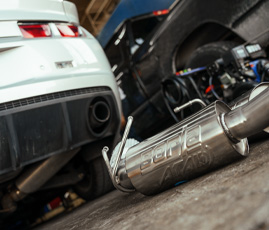
Your car’s exhaust system is much more than just a muffler. It’s a network of pipes, designed to control noise, funnel exhaust fumes away from passengers, and ensure safe vehicle operation.

Much like a chimney directs smoke out of a home, your exhaust system channels harmful gases from the engine to the rear of the vehicle, where they are safely released into the atmosphere.

Key Functions of Your Exhaust System:

  • Noise Reduction: The system helps reduce engine noise, offering a quieter ride.
  • Pollutant Conversion: The catalytic converter transforms harmful emissions into less harmful gases, improving air quality.
  • Passenger Safety: It prevents dangerous gases like carbon monoxide from entering the cabin.
  • Performance Boost: The exhaust system creates the right amount of backpressure, improving fuel efficiency and overall performance.

Main Components of the Exhaust System:

  • Exhaust Pipes: Route exhaust gases from the engine to the back of the car.
  • Exhaust Manifold: Collects exhaust gases from engine cylinders and directs them into the system.
  • Catalytic Converter: Reduces harmful emissions by converting pollutants into safer byproducts.
  • Muffler: Minimizes engine noise with baffles and chambers.
  • Resonator: Works with the muffler to further reduce noise.
  • Tail Pipe: Directs gases safely out of the vehicle.

Your exhaust system is made up of a series of clamps, hangers, flanges, and gaskets, all designed to keep everything securely in place. Keeping it in top condition is essential for the performance, safety, and longevity of your car.

Headlight Restoration Service

Headlight Restoration is a big deal for motor vehicle that are driven during day and at night. Here at Revive Auto Repair we have a team that will clean and restore your front headlight getting them to

look just like NEW. No need to buy new headlights come visit us and get your vehicle headlights looking brighter at night for more visibility and looking like new.

Oil, Lube, and Filter

Check your owner's manual to see if your driving habits qualify as "severe service," which requires more frequent oil changes (every 3,000–5,000 miles), according to the Car Care Council. In cold climates, switching from 10W-30 to 5W-30 reduces engine wear.

Oil filters have a high-strength steel housing with filtering media to remove contaminants. An anti-drainback valve prevents oil from draining when the engine is off. Modern spin-on filters allow for easy replacement. A clogged filter forces oil to bypass it, which should be avoided with regular maintenance.

Follow your manual’s recommendations, typically every 3,000 miles or 3 months. If changing the filter yourself, dispose of it properly at a recycling facility. One improperly discarded filter can contaminate 62,000 gallons of groundwater. Content provided by Car Care Alliance

Shocks and Struts

Your vehicle’s suspension and steering systems play a critical role in ensuring a smooth, stable, and controlled ride. These systems allow the wheels to move independently while keeping your vehicle properly balanced.

Any wear, looseness, or uncontrolled motion in these components can lead to poor handling, reduced stability, and accelerated tire wear.

Steering System

A properly functioning steering system is essential for maintaining directional stability and precise control. Worn or loose components can affect alignment, making it harder to steer and causing uneven tire wear.

Types of Steering Systems & Key Components

🔧 Conventional Steering System:

  • Steering Gear Box
  • Center Link
  • Pitman Arm
  • Idler Arm
  • Tie Rods

🔧 Rack & Pinion Steering System:

  • Rack & Pinion Assembly
  • Bellows Boots
  • Tie Rods

Suspension System

Your vehicle’s suspension system helps maintain proper ride comfort, handling, and wheel alignment. Worn or damaged suspension components can lead to excessive bouncing, poor control, and increased tire wear.

Key Suspension Components:

  • Control Arms
  • Ball Joints
  • Springs (Coil or Leaf)
  • Shock Absorbers
  • Struts

Why Suspension & Steering Maintenance Matters

Keeping your suspension and steering systems in top condition ensures a safer, smoother ride, better fuel efficiency, and extended tire life. If you notice vibrations, pulling to one side, uneven tire wear, or difficulty steering, it’s time for an inspection.

📞 Call us at 248-817-5370 to schedule an appointment at Revive Auto Repair in Troy and keep your vehicle running safely and smoothly!

Tire Replacement

Top quality tires, at wholesale prices!

Any wear, looseness, or uncontrolled motion in these components can lead to poor handling, reduced stability, and accelerated tire wear.

Steering System

A properly functioning steering system is essential for maintaining directional stability and precise control. Worn or loose components can affect alignment, making it harder to steer and causing uneven tire wear.

Types of Steering Systems & Key Components

🔧 Conventional Steering System:

  • Steering Gear Box
  • Center Link
  • Pitman Arm
  • Idler Arm
  • Tie Rods

🔧 Rack & Pinion Steering System:

  • Rack & Pinion Assembly
  • Bellows Boots
  • Tie Rods

Suspension System

Your vehicle’s suspension system helps maintain proper ride comfort, handling, and wheel alignment. Worn or damaged suspension components can lead to excessive bouncing, poor control, and increased tire wear.

Key Suspension Components:

  • Control Arms
  • Ball Joints
  • Springs (Coil or Leaf)
  • Shock Absorbers
  • Struts

Why Suspension & Steering Maintenance Matters

Keeping your suspension and steering systems in top condition ensures a safer, smoother ride, better fuel efficiency, and extended tire life. If you notice vibrations, pulling to one side, uneven tire wear, or difficulty steering, it’s time for an inspection.

📞 Call us at 248-817-5370 to schedule an appointment at Revive Auto Repair in Troy and keep your vehicle running safely and smoothly!

Tire Rotation and Balance

Regular tire rotation and balance ensures even tread wear, extending tire life and improving handling, safety, and fuel efficiency.

Tire Rotation Services

Regular tire rotation ensures even tread wear, extending tire life and improving handling, safety, and fuel efficiency.

When Should You Rotate Your Tires?

✅ Every 6,000 miles (check your owner’s manual for specific guidelines).
✅ Rotation patterns vary by vehicle—some have directional tires or different front/rear sizes.

🔹 Pro Tip: Rotate tires while checking wheel balance for a smoother ride.

📞 Call Revive Auto Repair at 248-817-5370 to schedule your tire rotation today!

Content provided by Car Care Alliance


Wheel balancing ensures a smooth, vibration-free ride by evenly distributing weight across your tires. This is done by placing small weights on the opposite side of any “heavy spots” in the tire.

Signs You Need Wheel Balancing:

Vibration in the steering wheel, seat, or floorboard at speeds between 50-70 mph.
Uneven tire wear, such as scalloped or erratic tread patterns.

A quick, affordable balancing service can make a huge difference in ride comfort and tire longevity.

📞 Call Revive Auto Repair at 248-817-5370 to schedule your wheel balancing today!

Wheel Alignment

Wheel alignment ensures your tires are positioned correctly, improving handling, fuel efficiency, and tire longevity.

Misaligned wheels can cause your car to pull to one side, resist steering, and wear out tires unevenly.

Key Alignment Angles:

🔹 Toe – The inward or outward tilt of tires when viewed from above. Misalignment causes excessive tire wear.
🔹 Camber – The tilt of wheels when viewed from the front. Incorrect camber can affect stability and handling.
🔹 Caster – The angle of the steering axis, affecting steering stability and cornering.
🔹 Thrust Angle – Ensures all four wheels are aligned with the vehicle’s centerline for proper tracking.

Modern computerized alignment systems precisely measure and adjust these angles. If your car pulls to one side, has uneven tire wear, or a crooked steering wheel, it’s time for an alignment.

📞 Call Revive Auto Repair at 248-817-5370 to schedule your wheel alignment today!

Transmission Maintenance

The transmission is one of the most complex and expensive systems in your vehicle, responsible for transferring power from the engine to the wheels and controlling your speed.

For automatic transmissions, this is managed by a torque converter that adjusts gears without a clutch.

Why Regular Transmission Maintenance is Essential

Neglecting transmission service can lead to rough shifting, accelerated wear, and even total failure. The most common issues arise when the transmission fluid isn’t changed regularly, causing overheating and friction.

Our Transmission Services Include:

Drain Transmission & Torque Converter
Refill with Fresh Automatic Transmission Fluid (ATF)

Ensure your transmission is properly lubricated and cooled by high-quality fluids installed by our experienced technicians. Prevent costly repairs by keeping up with regular maintenance.

📞 Call Revive Auto Repair at 248-817-5370 to schedule your transmission service today!

Our Gallery

schedule an appointment today!